AQA GCSE English Literature Revision Notes & Quote Flashcards
Aripsy turns your AQA GCSE English Literature notes, quote banks, marked class feedback, or anthology annotations into revision summaries, flashcards, and practice prompts. Paste one text, theme, character, poem, or essay plan at a time so the output stays focused and easy to check.
50,000+
Students
4.9
Rating
50+
Countries
English Literature
GCSE / SAT
AQA
Pro unlocks PDFs, MCQs, fill-blanks, PDF export, and Anki export.
Short answer
What is AQA GCSE English Literature revision notes?
Aripsy turns your AQA GCSE English Literature notes, quote banks, marked class feedback, or anthology annotations into revision summaries, flashcards, and practice prompts. Paste one text, theme, character, poem, or essay plan at a time so the output stays focused and easy to check. It is designed for exam revision for GCSE AQA English Literature, with outputs students can review, practise from, and export where their plan supports it.
Best input
Paste one AQA GCSE English Literature focus at a time, such as a character paragraph, theme notes, poem comparison, quote bank, or marked class feedback.
Responsible use
Use Aripsy alongside your set texts, marked class feedback, anthology, class notes, and mark schemes. Check quotations, context, and interpretations before revision.
AQA GCSE English Literature Revision Notes & Quote Flashcards
Aripsy turns your AQA GCSE English Literature notes, quote banks, marked class feedback, or anthology annotations into revision summaries, flashcards, and practice prompts. Paste one text, theme, character, poem, or essay plan at a time so the output stays focused and easy to check.
Why use this Tool?
How to Generate Study Notes
Common Questions
Can Aripsy make AQA GCSE English Literature revision notes?
Can Aripsy create quote flashcards?
Does Aripsy cover poetry comparison?
Are generated Literature interpretations official AQA answers?
Can Aripsy help with essay planning?
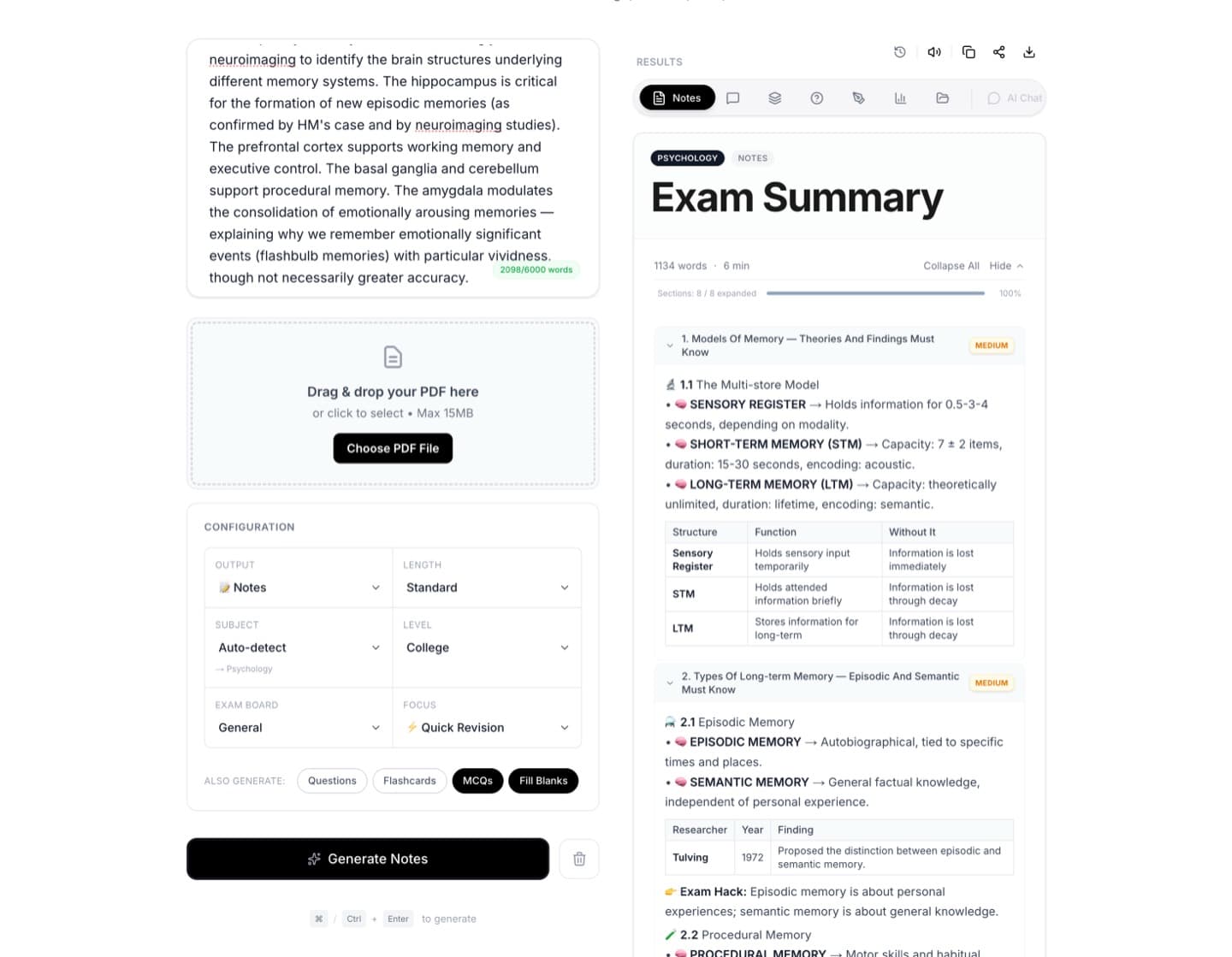
Product workflow preview
What the workflow looks like in Aripsy
Students can paste a focused English Literature extract, quote bank, or theme plan, choose English Literature and AQA settings, then generate notes and active recall prompts.
What is covered in AQA GCSE English Literature?
AQA GCSE English Literature revision usually covers a Shakespeare text, a 19th-century novel, modern prose or drama, poetry anthology comparison, and unseen poetry. Aripsy helps students organize their own notes into theme summaries, quote prompts, and essay-plan checks.
Text, theme, and character revision
Useful inputs include class notes on a key scene, a character mind map, marked feedback on an essay, or a short quote bank. Aripsy can turn these into revision notes that separate argument, evidence, method, context, and possible exam questions.
Sample English Literature flashcards
Example cards include: What can a Macbeth ambition paragraph argue? Shakespeare presents unchecked ambition as psychologically destructive and politically destabilising. What should a quote flashcard include? The quote, speaker, moment, method, and why it supports an interpretation.
Common mistakes to check before revising
Students often memorise inaccurate quotations, retell the plot instead of analysing methods, bolt on context without linking it to the argument, or compare poems by listing similarities only. Generated notes should be checked against the text and marked class feedback.
How to revise English Literature with Aripsy
Use one focus at a time. Paste your notes, generate a structured summary, check quotes and interpretations, then create flashcards for quotations and practice prompts for essay planning.
Using AI without losing your own interpretation
English Literature marks depend on your argument and evidence. Use Aripsy to organize revision material, but keep your own interpretations, class discussion, and marked class feedback at the centre of the essay plan.
Useful student workflows
Character and theme revision
Turn class notes on a character, relationship, theme, or scene into clearer essay-plan points and quote prompts.
Poetry comparison practice
Paste anthology notes and create comparison prompts for themes, methods, structure, and context.
Quote bank checking
Use short quote lists to create recall flashcards, but verify wording against the set text before memorising.
Why Literature pages need text-aware revision guidance
A useful AQA GCSE English Literature page should not pretend one generic template fits every text. Students need reminders to verify quotations, connect methods to meaning, compare poems directly, and use context only where it supports interpretation. That makes the page more useful than a thin "English notes generator" page.
What to paste for better Literature notes
The best input is focused and grounded: a quote bank, annotated extract, character notes, theme table, marked class feedback, or a paragraph plan. Pasting a whole set text is less useful than pasting the scene, theme, poem, or essay plan you are actively revising.
Turning Literature notes into active recall
After checking generated notes, turn quotations into recall cards, interpretations into explanation prompts, and common essay mistakes into self-check questions. For poetry, make comparison cards that ask for a shared theme, one similarity, one difference, and the methods used by each poet.
Sources and further reading
These independent education resources inform the study habits discussed on this page. Always follow your teacher, tutor, specification, or official exam guidance first.
GCSE English Literature 8702
Official starting point for checking the current AQA GCSE English Literature specification, assessment structure, and set text requirements.
The Learning ScientistsThe science of learning
Provides study strategy resources that support active recall and retrieval practice.
Topics Supported
Ready to revise with less friction?
Join over 50,000 students using Aripsy to study smarter, not harder.
Supported Subjects
Biology, Chemistry, Physics, Mathematics, History, Geography, Economics, Business, Psychology, Computer Science, English Literature.
Perfect for
CORE TOOLS
EXAM SPECIFIC
Explore More AI Study Tools
📐 AQA GCSE Maths
Revise AQA GCSE Maths with method notes, formula flashcards, and practice prompts.
📐 Edexcel GCSE Maths
Revise Pearson Edexcel Maths with method notes, flashcards, and practice prompts.
🧬 Edexcel GCSE Biology
Revise Pearson Edexcel Biology with notes, flashcards, practical checks, and questions.
🧬 AQA A-Level Biology
Revise AQA A-Level Biology with topic notes, required practicals, and essay prompts.
🧠 AQA A-Level Psychology
Revise AQA Psychology with AO1, AO2, AO3, research methods, and evaluation prompts.
⚗️ AQA A-Level Chemistry
Revise AQA Chemistry with mechanisms, calculations, practicals, and flashcards.